


Touring Agreement
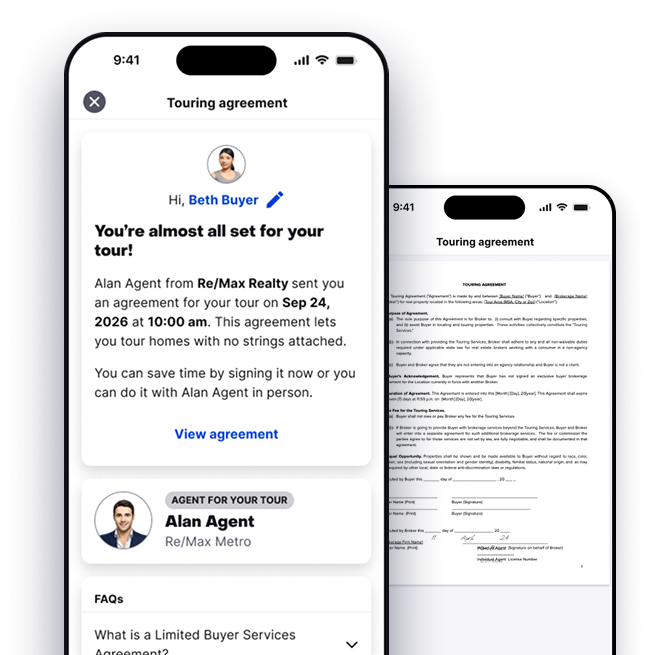
In 2024, the NAR settlement required buyers to sign an agreement before touring a home. I designed how Zillow buyers receive, understand and sign it, turning a new legal step into a moment of trust instead of friction.
Impact
+13.4%
Buyers who signed were 13.4% more likely to keep working with the agent they connected with.
+14.2%
Buyers who signed had a 14.2% higher tour success rate, meaning more tours actually happened as scheduled.
Lead designer, concept to pilot launch
My role
Team
Product, Engineering, Research, Content, Data Science, Legal, Marketing
Timeline
~ 1 month, discovery to pilot launch
The problem
For buyers: being asked to sign a legal document before even meeting an agent can feel confusing and risky.
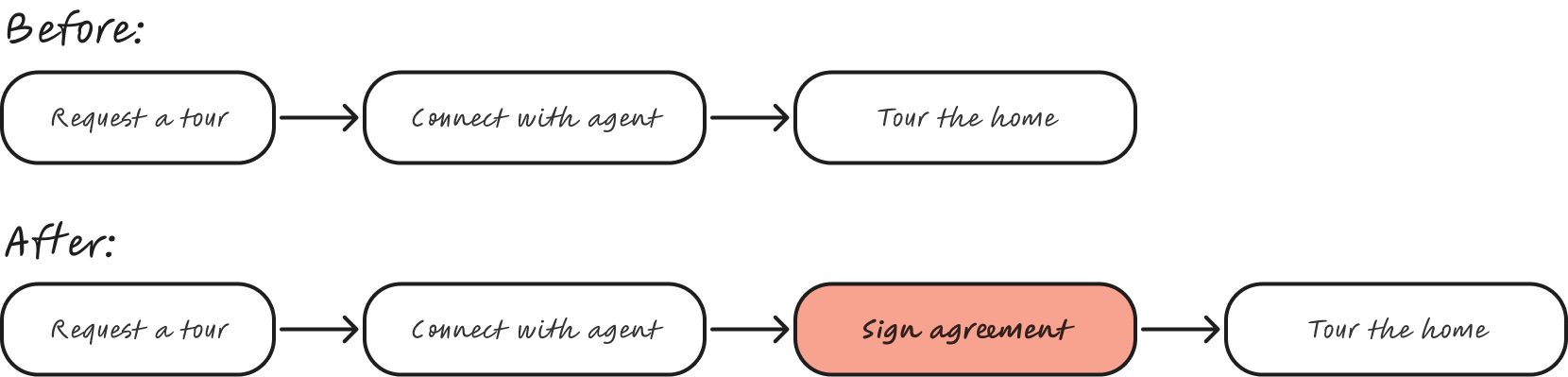
For agents & Zillow: the agreement had to be compliant in every state, easy for agents to send, and add as little friction as possible to the tour flow.
HOW MIGHT WE
Make signing an agreement feel safe and understandable, so buyers still get to their first tour?
Constraints
State-by-state requirements. Agreements had to reflect different state regulations and were reviewed with regulators.

A fixed legal document. Only a few fields, like agent and brokerage details, could be edited, so clarity had to come from the experience around the document.
A nuanced agreement to explain. It's optional, non-exclusive, involves no compensation, and lasts 7 days. Each of those details needed to come through clearly to buyers.

A two-sided system. Buyers, agents, and team leads all interacted with it differently.

Research and insights
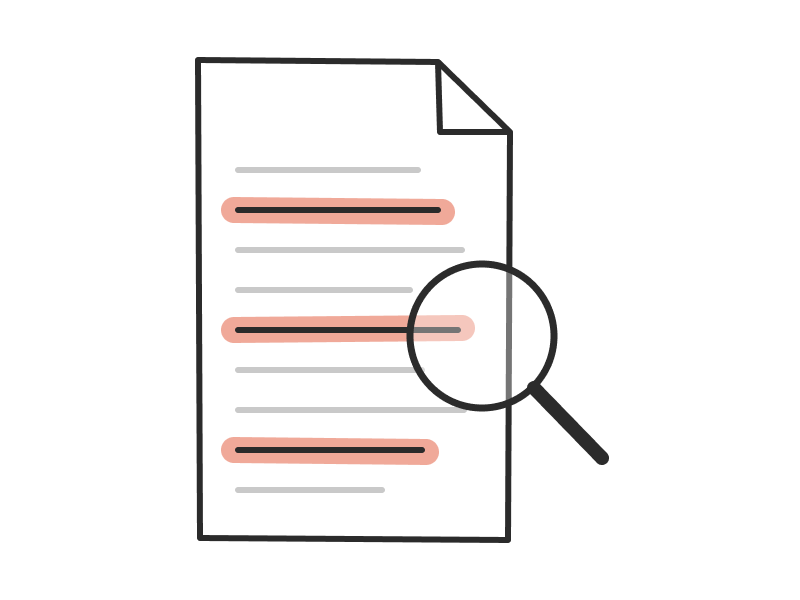
Buyers skim legal documents
At least 5 of 22 participants didn't read the agreement or barely skimmed it. When asked what they understood, most went back and scanned for specific details. Those who read it did understand the key terms: no cost, a 7-day expiry, and coverage for just this tour.

"Buyer's agent" confused people
Several participants assumed the agent was the listing agent for that home, or that a seller's agent would also be involved, and going through the rest of the flow didn't correct it.
Short FAQs built confidence
Most FAQs scored 4 to 5 out of 5, and after reading them, most participants felt very confident about signing. But "Why do I need a touring agreement?" didn't actually answer why, and "Do I need to sign it right now?" felt repetitive since the flow already said so.
Design
Key decision 1:
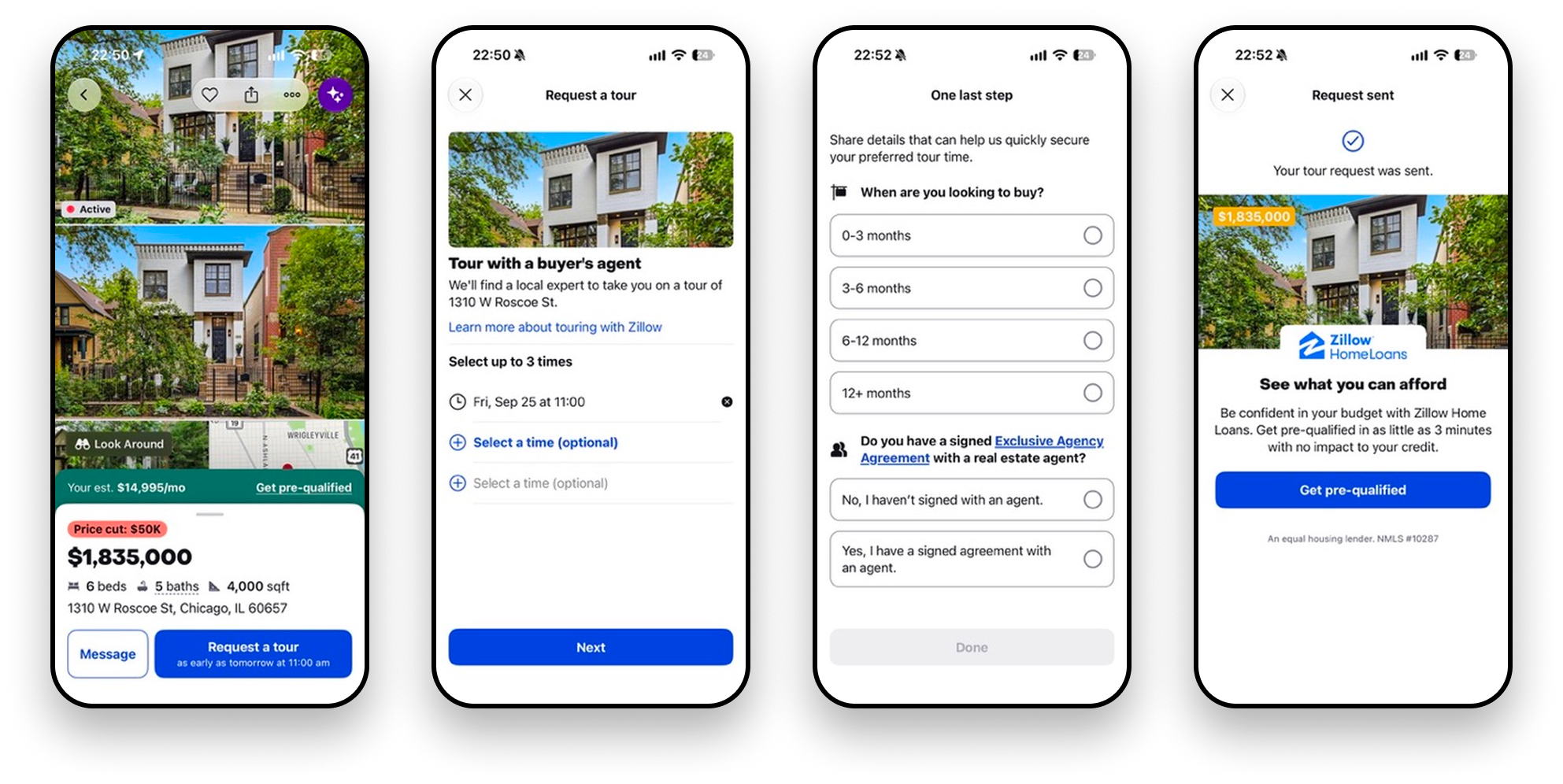
Sending the agreement after the tour request
I chose to present the agreement right after the tour was requested via text & email. This kept the request flow untouched, protecting connection rates, and reinforced that the agreement was optional.
Key decision 2:
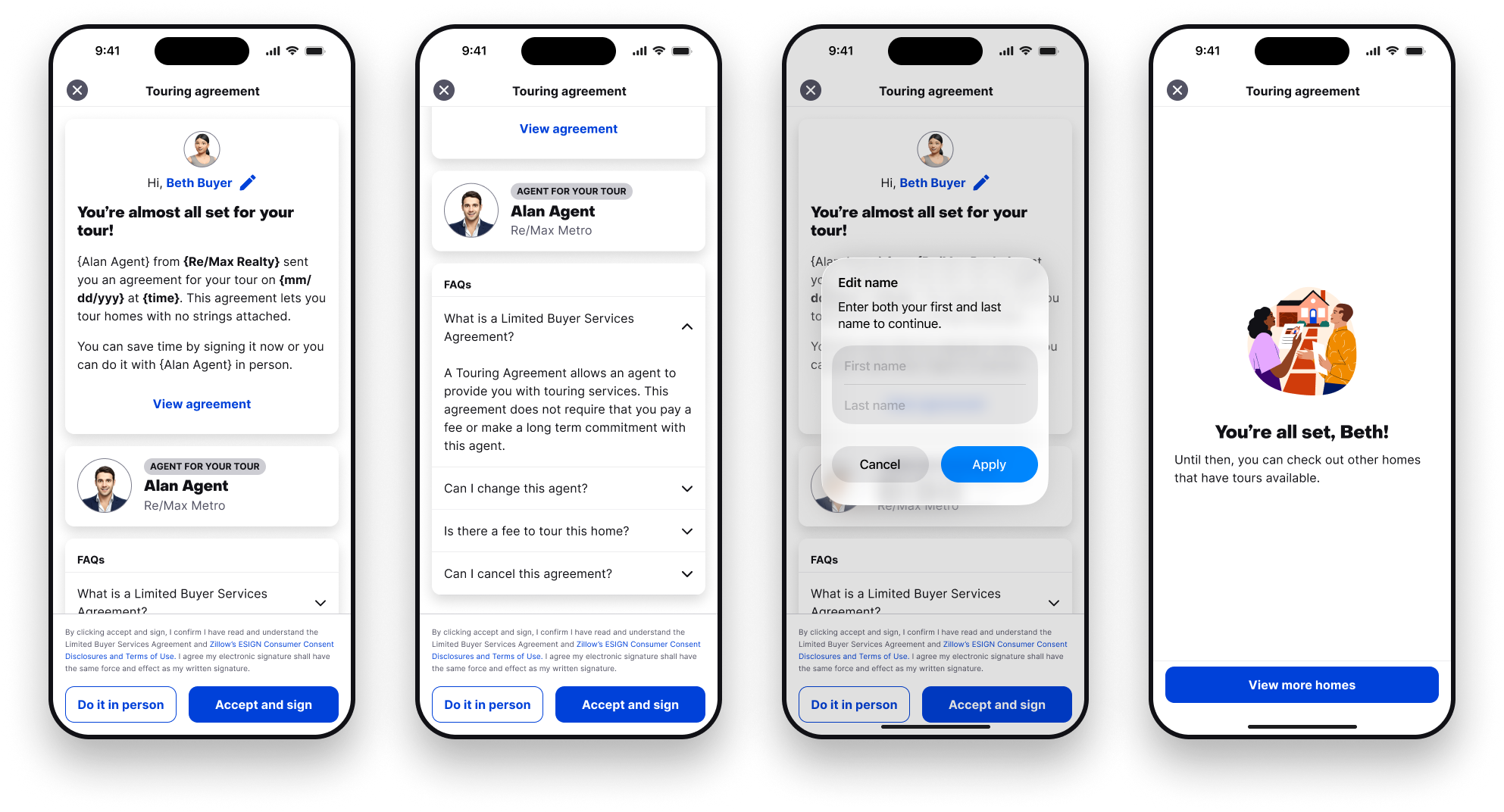
Making legal language understandable
The final flow opens with a friendly greeting and a plain-language summary of those four key points, supported by simple visuals, followed by the full agreement and an FAQ. I partnered with a content designer to translate the legal language into plain terms.
Key decision 3:
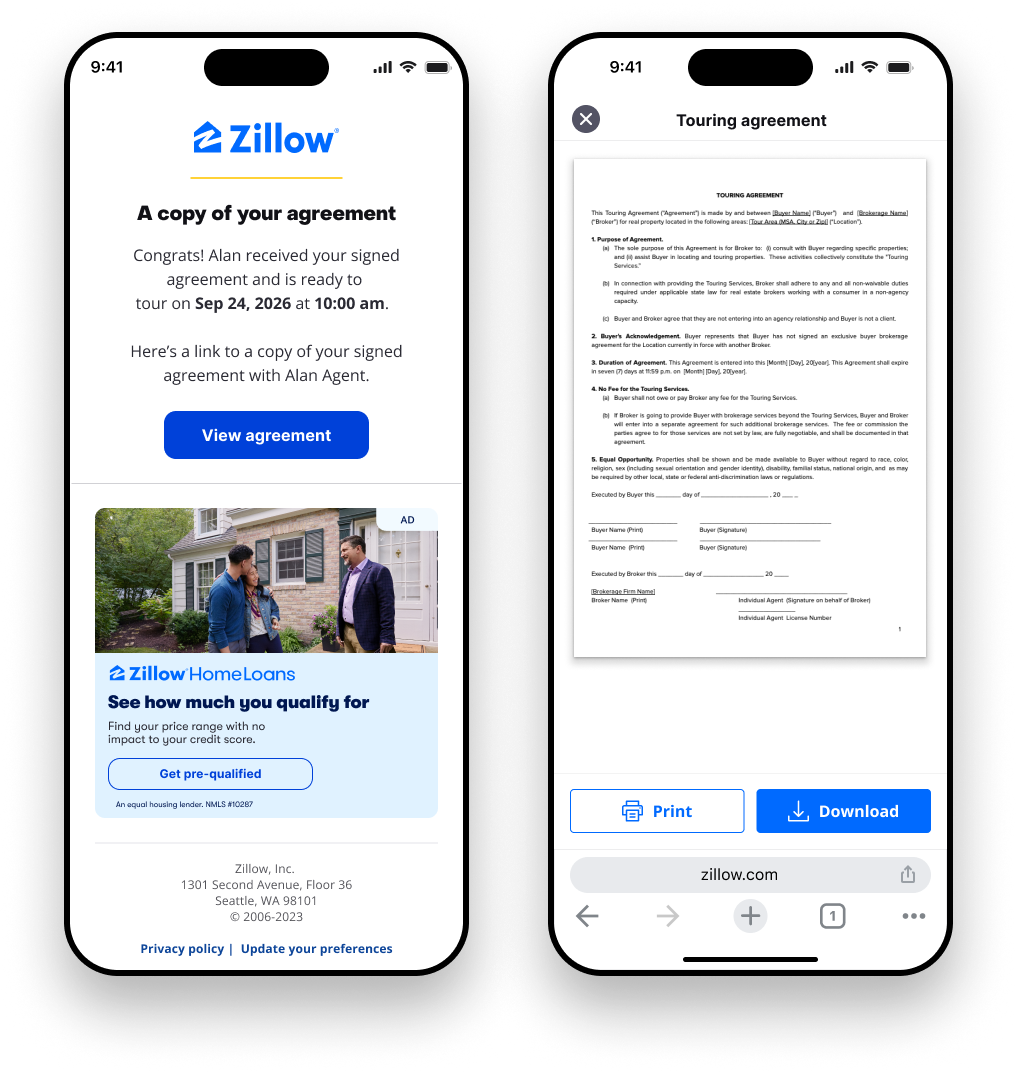
Surfacing the signed agreement after signing
A centralized documents area would have been ideal, but Zillow didn't have one, and building it wasn't feasible before the deadline. The tour details page would bury the agreement, making it hard to find when buyers needed it. Email met buyers where they already expect paperwork to arrive. After signing, buyers received a confirmation email with their signed agreement and next steps.
Impact
13.4%
Buyers who signed were 13.4% more likely to keep working with the agent they connected with.
14.2%
Buyers who signed had a 14.2% higher tour success rate, meaning more tours actually happened as scheduled.
Launched ahead of the rule change
Shipping early gave us time to learn from the MVP and iterate before the agreement became required.
Loved by partner agents
Agents said the flow saved them time and paperwork, and that sending the agreement through Zillow made it feel more trustworthy to buyers.
Reflection
-
The touring agreement lived on two sides: buyers signed it, and agents sent it. In hindsight, I'd bring the agent-side design team in from the very start and align our timelines, so both flows evolve together. When one side needs to change, the other can adapt quickly instead of discovering it late.
-
Every decision had to satisfy three sets of needs: buyers' need for clarity, the business's need to protect tour requests, and legal's need for compliance. Since the legal text itself couldn't change, my biggest levers were structure, sequencing, and plain language around the document. Learning to design within fixed requirements, rather than around them, was the most valuable part of this project.
-
Email solved where to surface the signed agreement for launch, but it also revealed a bigger gap: buyers have no single place on Zillow to find their documents. A centralized documents area would make it easier to find and sign agreements later, and it would scale as more of the home-buying process moves online.